When German troops entered Kraków in early September 1939, the city did not resemble a battlefield. There was no prolonged fighting in the streets and no immediate destruction. This deceptive calm, however, masked a far deeper transformation. Kraków was about to become one of the most important administrative centres of Nazi rule in occupied Europe.
Before the war, the city had been a cultural and intellectual hub of southern Poland. Poles and Jews shaped its everyday life together – in universities, workshops, synagogues, theatres, cafés, and publishing houses. This coexistence, built over centuries, was dismantled within months as German occupation policies introduced systematic exclusion, repression, and terror.
Kraków as the Capital of the General Government
Unlike cities such as Warsaw, Kraków was largely spared physical destruction in 1939. Instead, it was selected as the capital of the General Government, the administrative unit governing occupied Polish territories. This decision placed Kraków at the political heart of Nazi authority in Poland.
Governor-General Hans Frank established his headquarters in Wawel Castle, transforming a centuries-old symbol of Polish sovereignty into the seat of German power. From this location, decisions affecting millions were issued – including racial legislation, forced labour policies, and deportations. The symbolic takeover of Wawel was a calculated act meant to demonstrate dominance and erase national identity.
At the same time, Polish institutions were dismantled. Higher education and cultural life were targeted deliberately, following a broader Nazi strategy seen across occupied Europe: the removal of intellectual elites to weaken societies from within.
Everyday Life Under Occupation
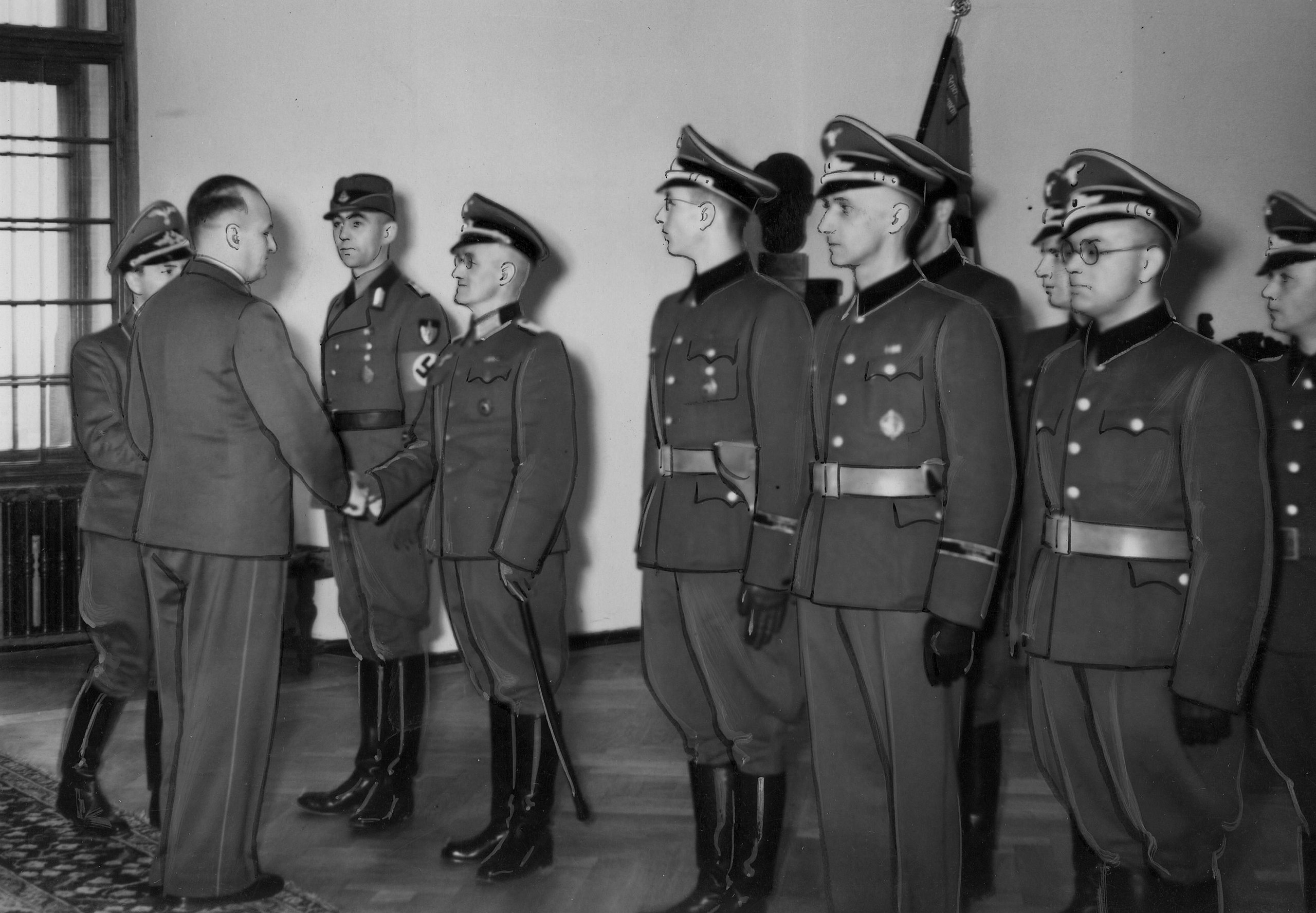
For Kraków’s residents, daily life quickly became defined by control and fear. Curfews, rationing, confiscations, and random arrests were constant. Parts of the city were designated as German-only zones, while Polish and Jewish families were expelled from their homes to make space for officials and settlers.
Forced labour became a central feature of occupation. Thousands of inhabitants were compelled to work in factories, workshops, and construction sites serving the German war economy. Others were deported to labour camps in Germany. This system of exploitation reflected policies implemented throughout occupied Europe, where civilian populations were treated as expendable resources.
These mechanisms of repression and labour exploitation formed an integral part of the wider system documented by the United States Holocaust Memorial Museum.
The Kraków Ghetto and the Process of Exclusion
In 1941, German authorities established the Kraków Ghetto in the Podgórze district, forcibly relocating Jewish residents into a sealed and overcrowded area. Walls, guards, and restrictions cut them off from the rest of the city, turning everyday survival into a constant struggle.
Despite extreme conditions – hunger, disease, violence – attempts were made to preserve dignity through underground education, cultural initiatives, and mutual support. These efforts stood in stark contrast to the systematic dehumanisation imposed by the occupation.
The ghetto’s liquidation in 1943 followed a pattern repeated across occupied Poland. Thousands were murdered on the spot or deported to the Płaszów camp and later to Auschwitz-Birkenau. These events were not isolated atrocities but part of a coordinated policy of extermination implemented across Europe.

Industry, Camps, and Individual Choices
Kraków’s industrial infrastructure became deeply entangled with forced labour. Many factories relied on prisoners and deportees supplied by the occupation authorities. Within this system, the story of Schindler’s Factory stands out as an exception rather than the rule.
Originally operating like other German-controlled enterprises, the factory later became a place of protection for more than a thousand Jewish workers. Oskar Schindler’s actions did not negate the brutality of the system in which he operated, but they reveal how individual choices could still alter human fates within structures designed for destruction.
Resistance in a City Under Surveillance
As the administrative centre of the General Government, Kraków was subject to intense surveillance, making open resistance extremely dangerous. Nevertheless, underground organisations emerged soon after the occupation began, later forming part of the Polish Underground State.
Their activities focused on intelligence gathering, clandestine education, and the preservation of Polish culture, which the occupiers attempted to erase. Armed actions were rare due to the risk of mass reprisals, yet acts of sabotage and resistance continued in various forms.
Within the Jewish community, resistance networks also developed. Initially focused on welfare and education, some later turned toward armed struggle. Although cooperation between Jewish and Polish underground groups was limited, it did occur and saved lives, often at enormous personal risk.
Liberation and the Burden of Memory
In January 1945, German forces retreated as the Soviet Red Army advanced. Kraków avoided the large-scale destruction suffered by other Polish cities, but liberation did not bring immediate freedom. Soviet control replaced German occupation, ushering in a new political reality marked by repression of former resistance members.
Today, Kraków’s wartime sites serve as places of remembrance. The former ghetto area, the grounds of the Płaszów camp, and Schindler’s Factory are preserved not as symbols of power, but as spaces of reflection. They testify to how occupation reshaped everyday life and how global policies of terror manifested in local, deeply human experiences.

Leave a Reply