Jewish Kraków Before the War
On the eve of the Second World War, Kraków was home to one of the largest and oldest Jewish communities in Poland. Between sixty and seventy thousand Jews lived in the city, forming nearly a quarter of its population. Jewish life was most visibly concentrated in Kazimierz, but it extended far beyond that district, shaping the social, economic, and cultural fabric of the entire city.
The community was far from uniform. Some families followed Orthodox traditions and spoke Yiddish, while others were largely assimilated and active in Polish cultural and academic circles. Many Jewish residents identified both with their Jewish heritage and with Kraków as their home. This pluralistic society was dismantled after the German invasion of Poland in September 1939, which marked the beginning of systematic persecution across occupied territories, as documented by the United States Holocaust Memorial Museum.
Early Persecution, 1939–1940
German forces entered Kraków on 6 September 1939. Anti-Jewish measures were introduced immediately. Jewish property was confiscated, synagogues were desecrated, and access to public space was restricted. Benches, trams, and entire streets were designated exclusively for Germans.
These policies were inseparable from the broader system of repression imposed during the German occupation of Kraków, as the city was transformed into an administrative centre of Nazi rule. Arrests and round-ups targeted Jewish men, many of whom were sent to temporary detention centres or forced-labour sites. In the spring of 1940, mass expulsions were ordered in an effort to reduce the Jewish population of Kraków. By early 1941, only around fifteen thousand Jews were permitted to remain in the city.
Establishment of the Kraków Ghetto
In March 1941, German occupation authorities ordered the creation of the Kraków Ghetto in the Podgórze district. By 21 March, more than fifteen thousand Jews from Kraków and nearby towns were forced into a sealed area covering approximately twenty hectares.

The ghetto consisted of thirty streets and around 320 buildings that before the war had housed only about three thousand residents. It was enclosed by a wall topped with barbed wire, with sections deliberately shaped like Jewish tombstones. The Kraków Ghetto followed the broader model of Nazi ghettos established across occupied Europe.
Life Inside the Ghetto
Life inside the ghetto was defined by overcrowding, hunger, and fear. Several people often shared a single room. Poor sanitation and limited access to water led to outbreaks of disease, including typhus.
Food rations allocated to Jewish residents were far below subsistence levels, often amounting to only a few hundred calories per day. Smuggling food from outside the ghetto became essential for survival, though it carried the constant risk of execution. In 1942, the ghetto was divided into sections for those deemed “fit for work” and those who were not – a division that anticipated later selections and deportations.
Despite these conditions, efforts were made to preserve dignity through underground education, religious practices, and cultural activities. Such acts did not alter the system of oppression but represented a form of moral resistance.
Deportations and Liquidation
During the summer and autumn of 1942, deportations dramatically reduced the ghetto’s population. Transports were sent to the Bełżec extermination camp, where victims were murdered shortly after arrival. These deportations formed part of the wider implementation of the Final Solution.
The final liquidation of the Kraków Ghetto took place in March 1943. Thousands of Jews were murdered on the spot or deported to forced-labour and extermination camps, including Płaszów and Auschwitz-Birkenau.
Assistance and Moral Choice
Despite the terror, acts of assistance occurred both within and beyond the ghetto walls. Polish pharmacist Tadeusz Pankiewicz, permitted to remain in his Pharmacy Under the Eagle, provided medicine and discreet support to Jewish residents.
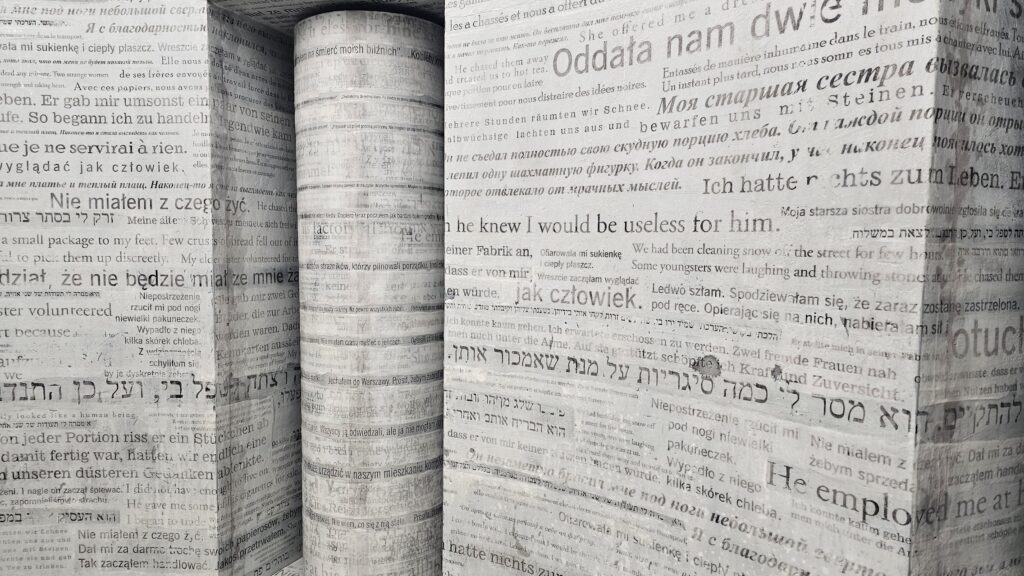
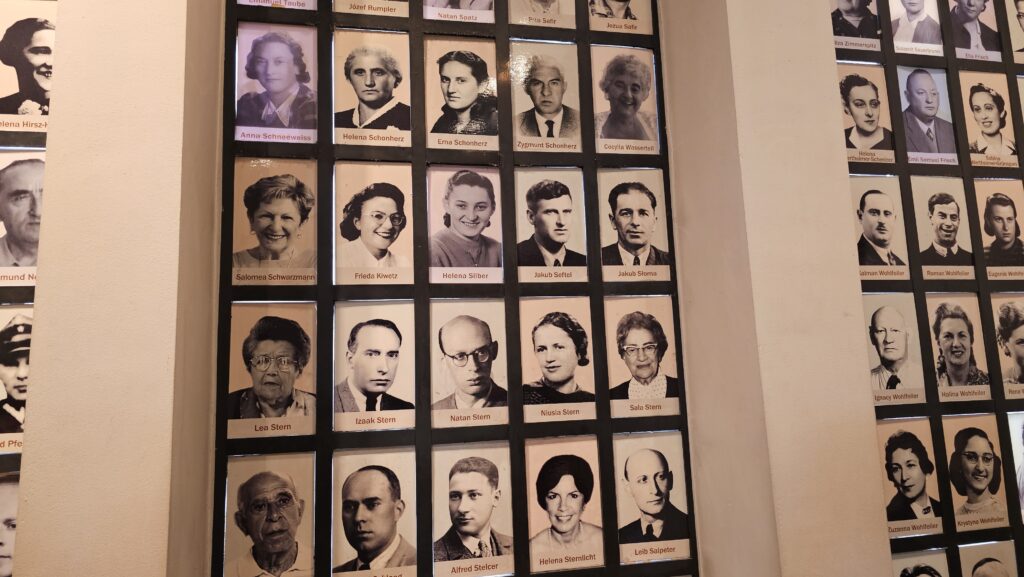
At the same time, at 4 Lipowa Street, Schindler’s Factory became a place of protection for Jewish workers. Oskar Schindler used his factory, formally integrated into the German war economy, to shield approximately 1,200 people from deportation and death. The historical background of these events is reflected today in the permanent exhibition at Schindler’s Factory, which presents Kraków under Nazi occupation through personal stories and original artefacts.
Aftermath and Memory
After the war, the former ghetto area lay devastated. Over time, Kraków began to confront this chapter of its history. Today, Ghetto Heroes Square serves as a memorial to the victims of the Kraków Ghetto, marked by symbolic empty chairs representing lives lost.
The history of the Kraków Ghetto illustrates how decisions taken at the highest levels of the Nazi state translated into systematic persecution and mass murder at the local level, leaving a lasting imprint on the city and its memory.
Leave a Reply